Colombia has fascinated me ever since I read Gabriel Garcia Marquez (Gabo) when I was studying Spanish A level at Stoke College. Marquez was a Colombian writer who, in 1982, was awarded the Nobel Prize for Literature for his novel Cien años de soledad (One Hundred Years if Solitude). The fictional town of Maconda, which features in the novel, is most likely based on Aracataca – a small rural town in the Magdalena district of Colombia where Gabriel was born. The book was largely written in Barranquilla whilst Marquez was working as a journalist for the El Heraldo newspaper. Sadly, the Museo del Caribe in Barranquilla that features the author’s work is now permanently closed. Further up the Caribbean coast in Santa Marta, Gabo is better remembered. It was a pleasant surprise to find a mural with a time-line of Gabo’s life on the outside of the Bank of Colombia building in the historic centre of the city.
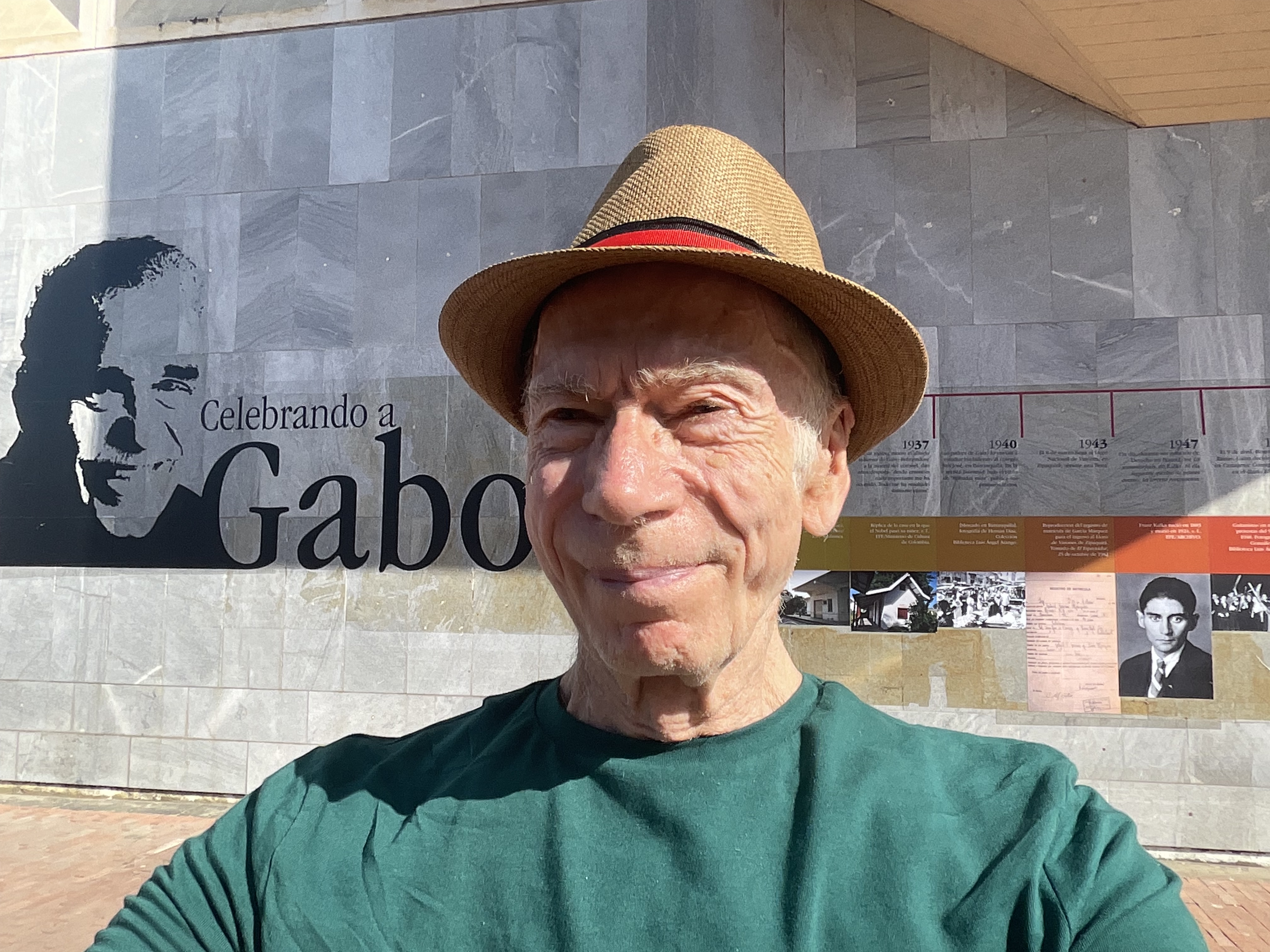
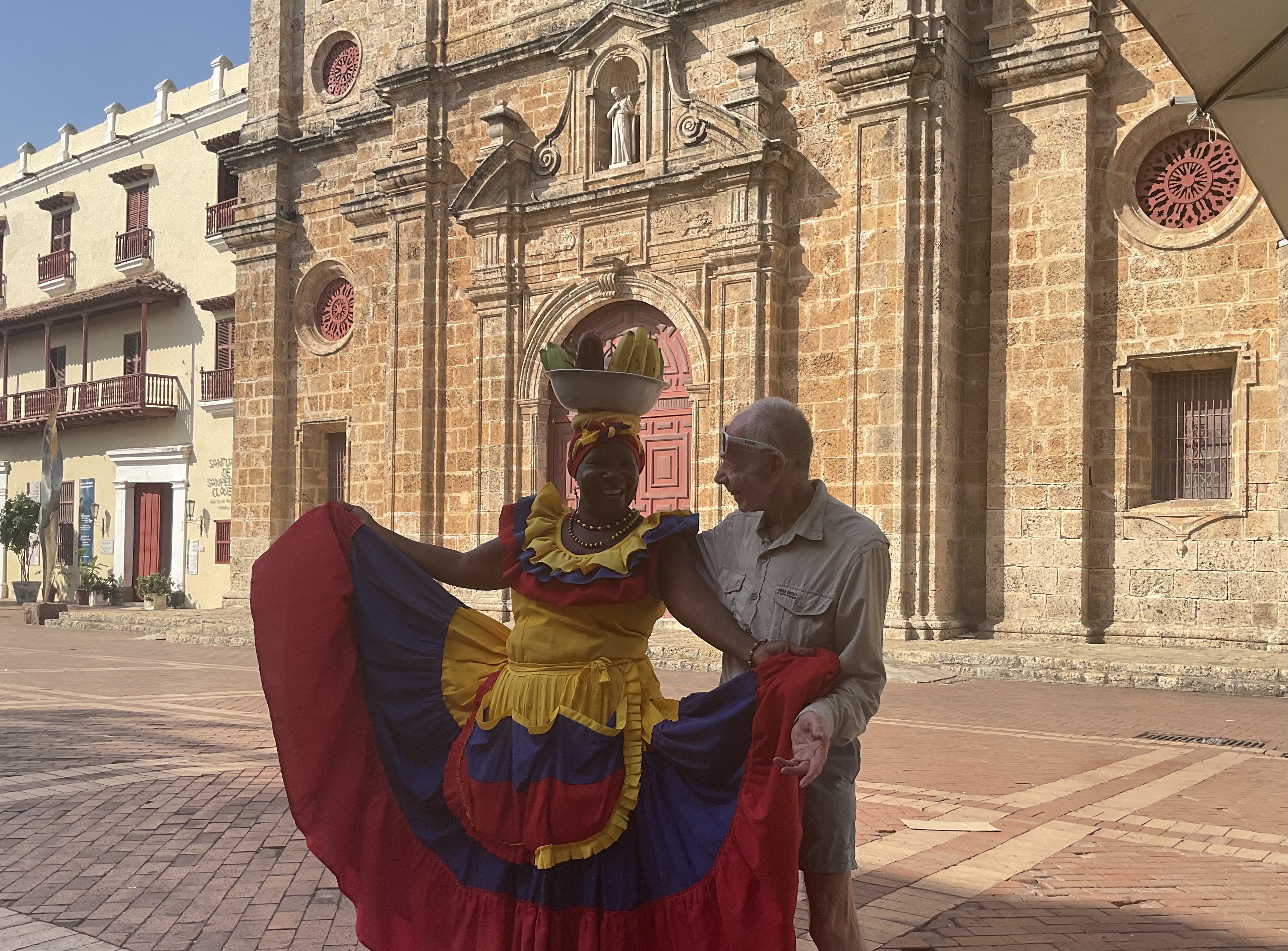
Santa Marta was the first place in Colombia where I felt comfortably at ease. Failing to realize the immense size of Bogota and its situation so close to the Equator, left me with painful sunburn and blisters on both feet after only one day. Cartagena was almost as daunting, but redeemed by it colourful historic centre with fine Colonial era buildings and vibrant street life.
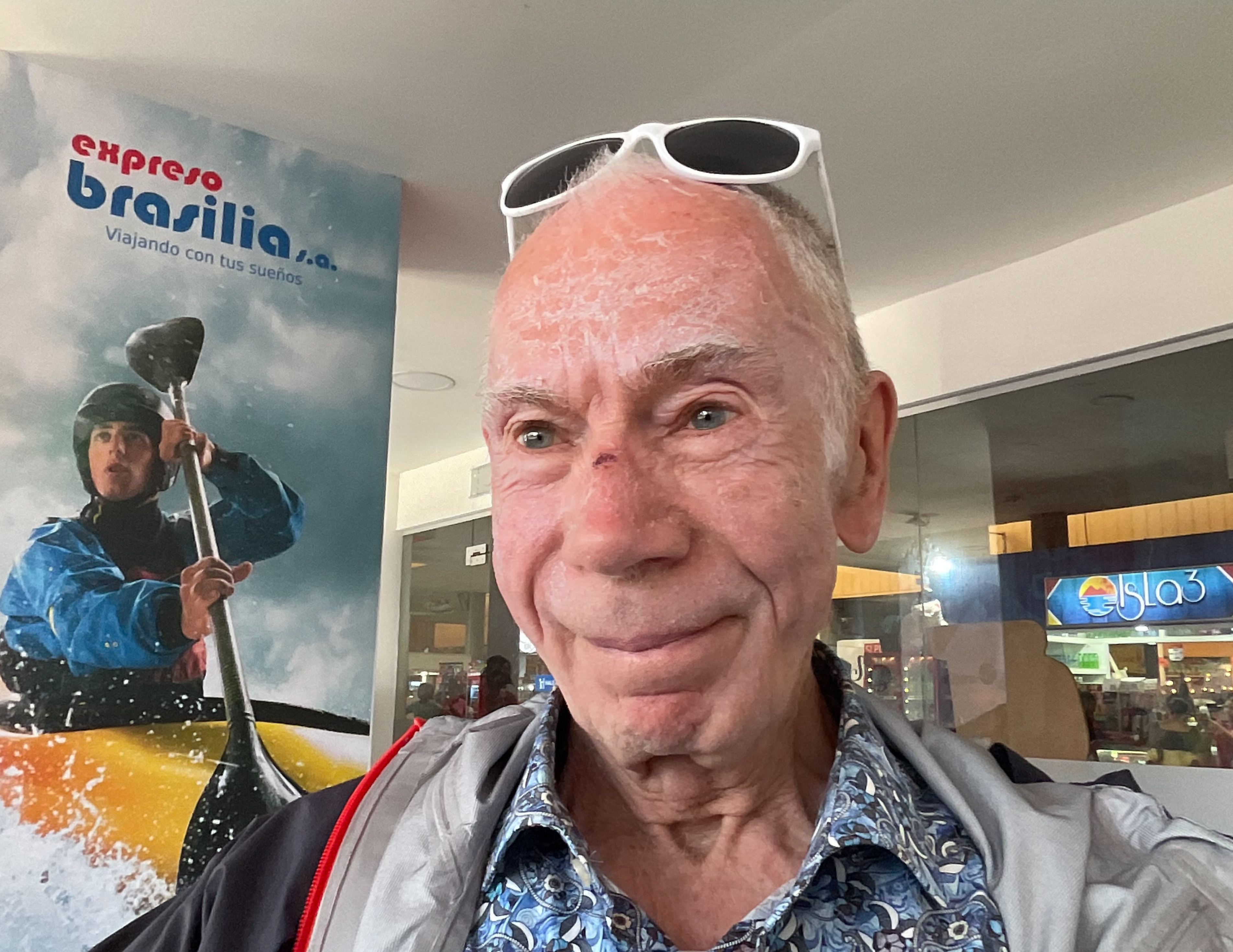
The easiest but most expensive way to get around such a big country is by flying. The cheapest but more complicated is by bus. This was the option I took from Cartagena to Barranquilla. A most helpful official at the Terminal de Transporte, found out where I wanted to go and showed me the best choice of buses – the Expreso Brasilia was his recommendation. He pointed out the significance of the different numbers on my ticket. Unfortunately, I misunderstood one of his explanations – I thought the number 15 referred to the bay from which the bus departed…it wasn’t…it was my seat number. I took the first empty seat on boarding the bus only to be disturbed by a young woman asking to see my ticket. Immediately, my mistake became apparent and, apologising profusely, started to gather my belongings together. The young lady stopped me, and said she was quite happy to sit in my seat once she knew what number it was. This small act of kindness is indicative of the way I was treated wherever I went. My impression is that Colombians, in general are amongst the kindest, and friendliest people I have ever met.
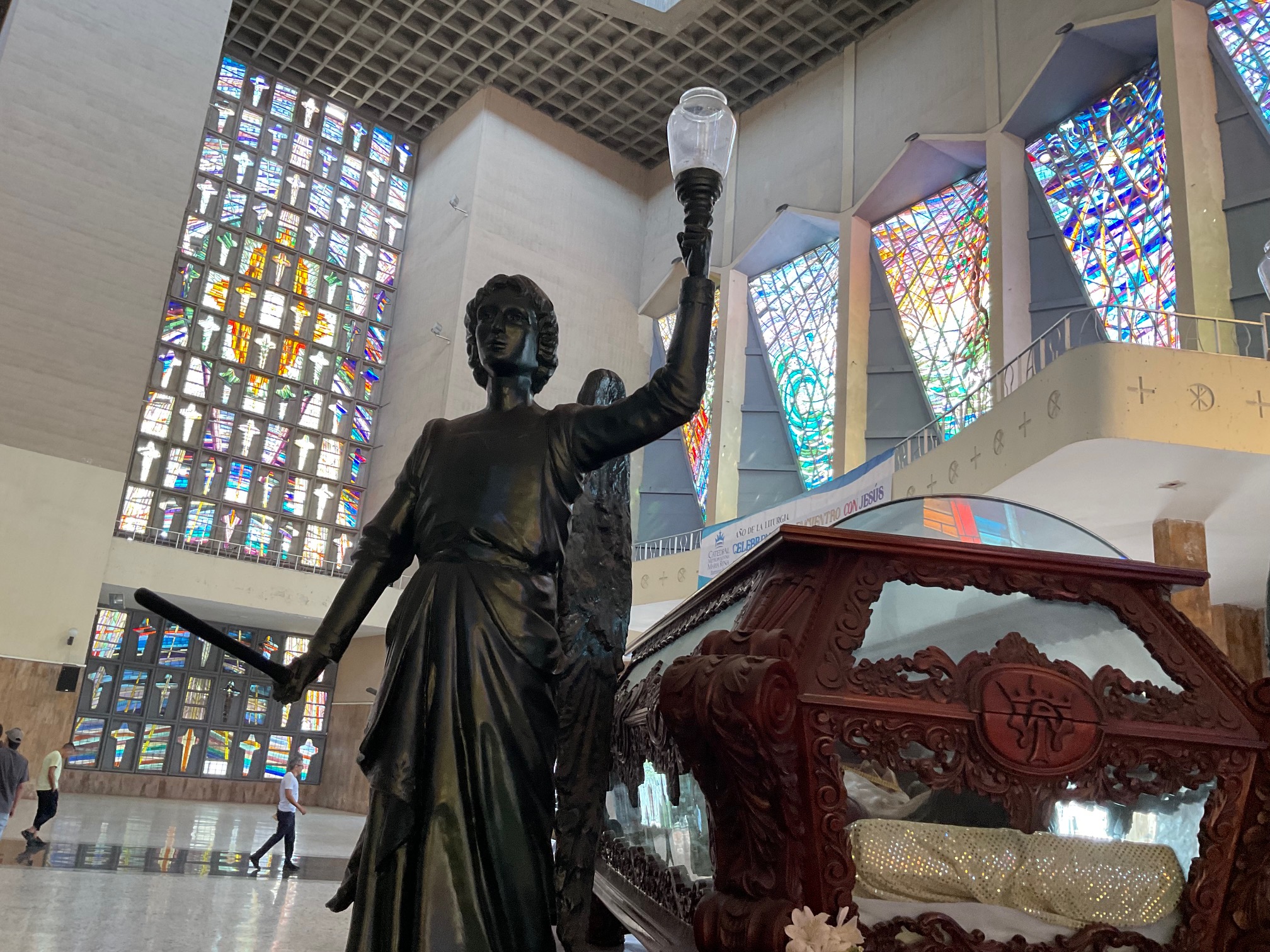
Apart from some very fine public buildings and churches, Barranquilla was the least appealing of all the cities I visited. I have never seen so much poverty on the streets or buildings in such dilapidated conditions. Even so, there were signs of regeneration and renewal both physically, in the significant amount of new construction work and, socially, and in the hopeful sermon of the celebrant at a packed cathedral at the 10.30 Sunday mass. I was lucky to grab one of the remaining seats. People were standing at the sides and at the back. However, the cathedral is so massive…it didn’t feel packed. There were even birds flying overhead…I would like to believe they were doves of peace…but I’m pretty certain they were pigeons.
To get to Santa Marta, instead of using public transport, I opted for a door to door taxi service. This turned out to be the most unusual and entertaining journeys of my entire trip. The driver had taken the opportunity to take his family for a day out at the seaside. His wife sat next to him in the front, I was in the back with two small children. On asking their names and ages, I discovered they were four-year-old twins. Once they had shown me that they could count up to ten and demonstrated they knew the colour of everyday objects …there was no stopping them, especially the little boy. He was fascinated by the sunburn spots on the top of my head…and wanted to tell me a very long story. Conversing with adults in Spanish is one thing, trying to do so with a voluble toddler is a challenge of a different magnitude. Nonetheless, together we spotted all kinds of animals, plants and places and we all got excited at the first sight of the sea.
The journey was much longer than anticipated because the historic centre of Santa Marta is considerably further than the new town.
I scarcely noticed.
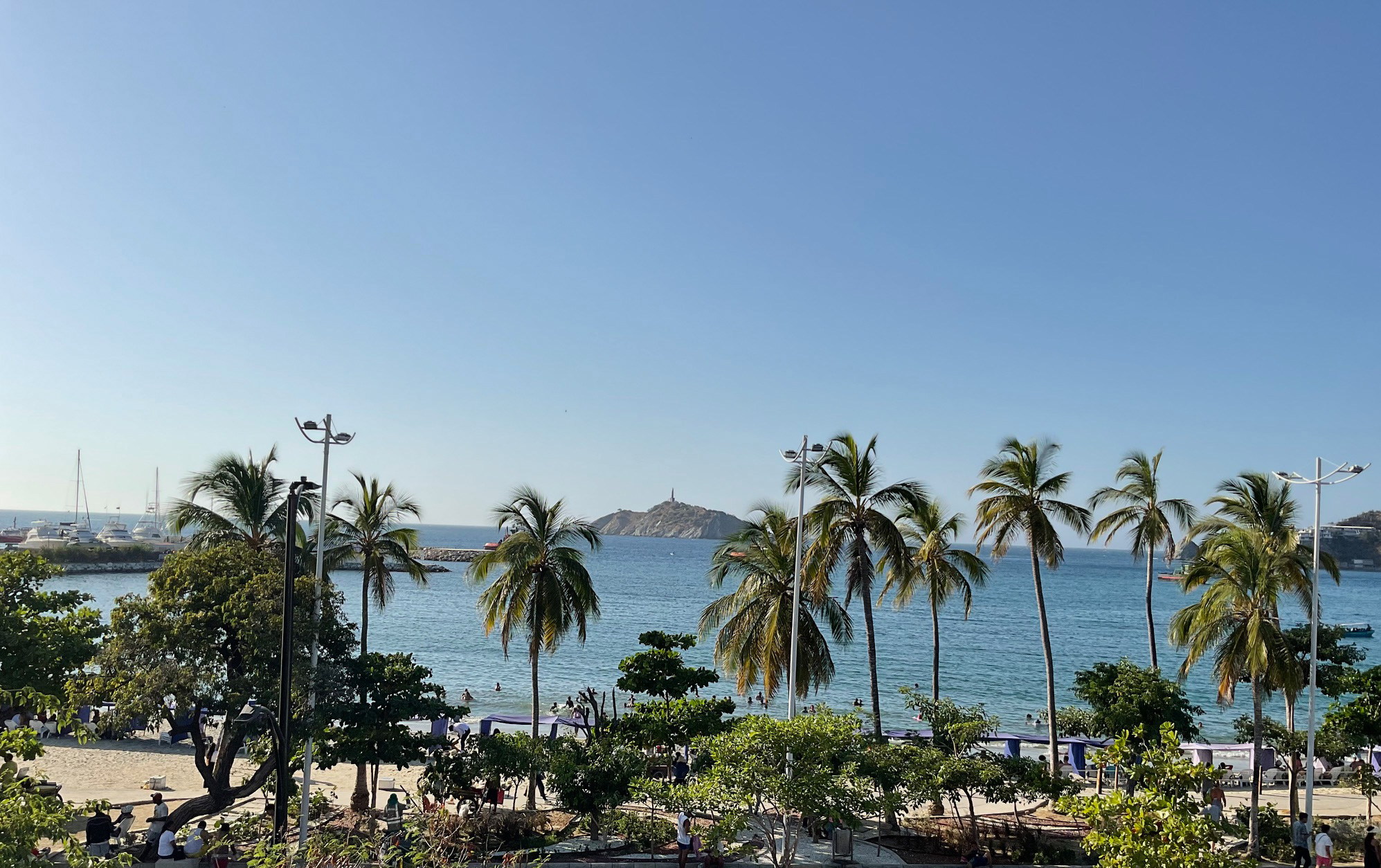
Santa Marta, as I have already mentioned, is a place I would love to revisit. I feel I know where to find the most interesting museums, good restaurants and all the best places to hang out and watch the world go by.
I took a day trip away from my seafront hotel to the Bahia de la Concha…a beautiful beach on the Caribbean coast. It is situated within the Tayrona National Park. I was used to being the only English speaking person on a bus…but it was the first time I had encountered a female driver. She (Claudia) was proud to point this out. We got on famously. Being the only single passenger on the bus, I had the privilege of sitting up front next to her. She had the knack of establishing a close rapport with her charge of day trippers – mostly Colombian families – she called us ‘Marineros’. The importance of this label became clear at lunchtime when our meals were served on the beach. Julio, her second in command, called out ‘Marineros’ – we knew he meant us and not any of the many other bus loads of people waiting for their lunches.
Sitting under the shade of palm trees on the beach, relaxing with a good book made a perfect day. It was easy to make friends…people were so open and curious. Many were fascinated to meet someone who had travelled all the way from England. During a conversation with Claudia prior to the journey back, she observed that I spoke very clear Spanish. Praise indeed!
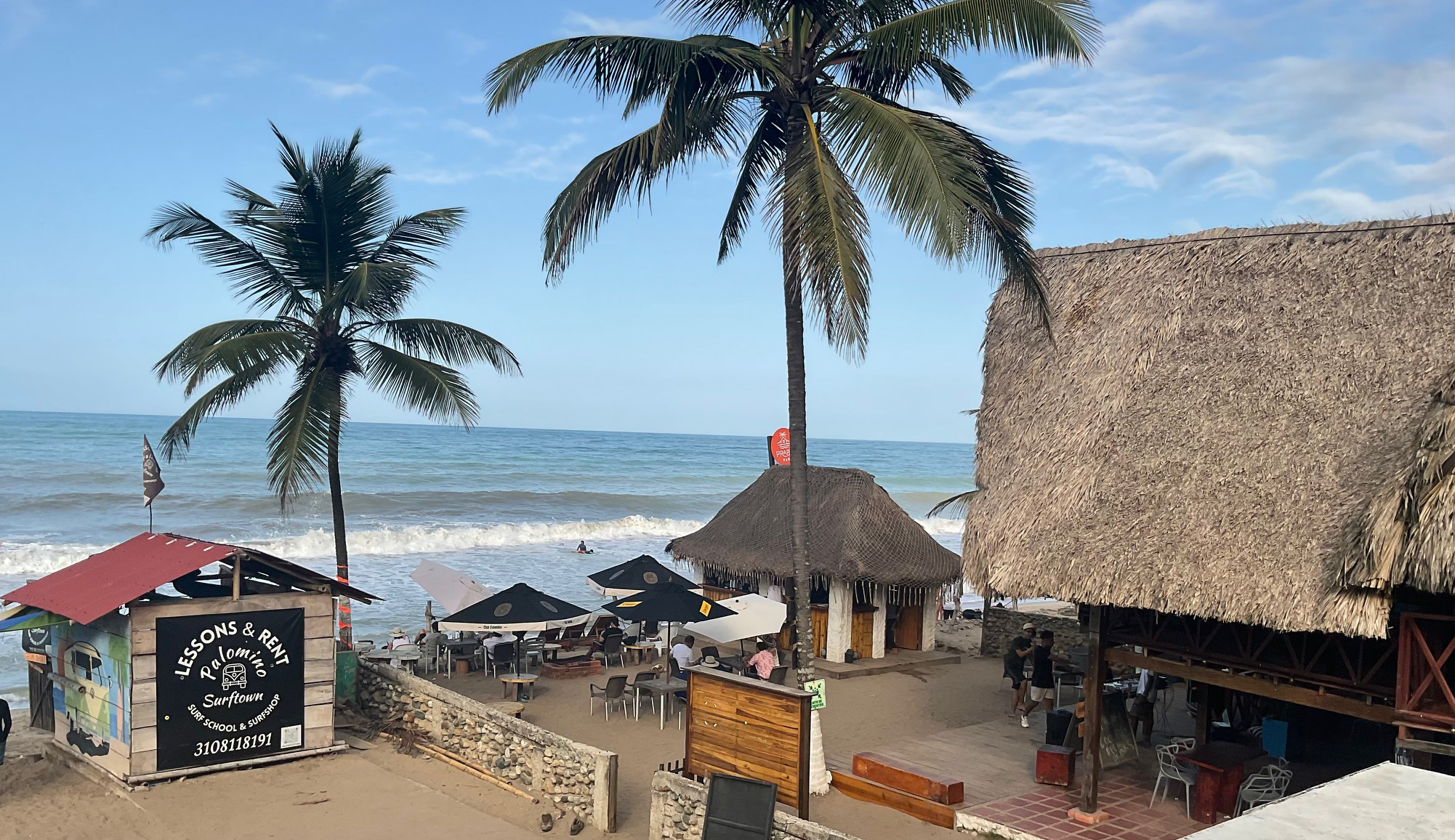
I felt it was too soon to leave the coast, so decided to spend a couple of days a bit further north at the Beach Party Hostel in Palomino. It was situated right on the beach. My transport from Santa Marta was shorter and less entertaining than my previous trip. But booking a door to door taxi was definitely the right thing to do. The hostel was at the end of a dirt track. A well traveled one, but with all the bumps and ruts of a narrow trail to the beach.
The hostel lived up to its name. The owners had warned me that it might get a bit noisy at night. Earplugs were supplied. Yes the music did go on to the small hours…but it was bearable for a couple of nights. Once again, the people were warm, friendly and inquisitive. Although there was Wi-Fi in the rooms, the only decent connection was in the communal area by reception where we had breakfast. This meant I was at the hub of activity. Apart from striking up acquaintance with staff and guests, I also acquired a couple of four legged friends who helped me get through an enormous meal. The food in Colombia is wonderful…there is such a rich fusion of cultures and cuisines. Even the fast food is of a higher quality than anything I have found at home.
I was sad to leave Palomino; like Santa Marta, I felt comfortable and relaxed there. I was delighted when I discovered there was no need to go all the way back to Barranquilla to catch a flight to Medellin. Santa Marta has its own airport. Although quite small, it has daily flights to the capital, Medellin and even international flights to nearby countries.
The distance to the airport is quite short in comparison to others. This was my second flight with budget airline Wingo. Although I had paid for one piece of hold baggage… by taking books out of my backpack and putting them into the big bag, its weight now exceeded the Wingo allowance. I had to pay a surcharge. No big deal…but annoying.
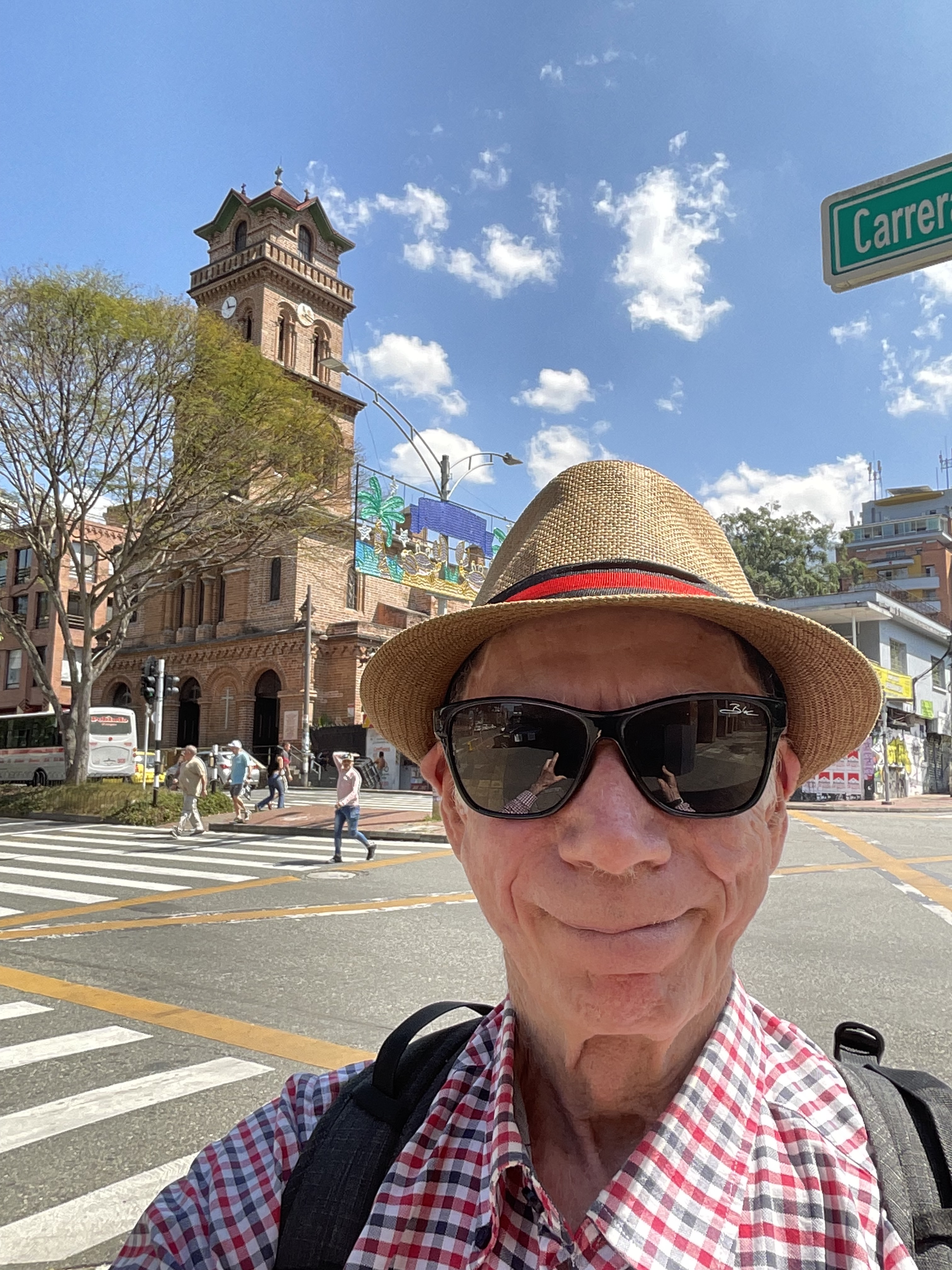
By this point in my trip, I no longer needed printed addresses or have details ready on my phone to show the driver. I might not know the way, but I was confident to tell driver the address that I wanted to be taken to.
Taxis from Medellin airport to the city were more expense than anywhere else. The reason soon became clear…the airport is located far away from the city at the other side of a mountain range. The tunnel beneath the mountains is an astonishing feat of engineering; it is the longest not only in Colombia, but in the entire southern hemisphere. The view when you finally emerge from the seemingly endless dark passage, is breathtakingly stunning.
Medellin nestles in a cradle of towering peaks. However, it is a large city with heavy traffic that produces the heaviest pollution of any urban area in the country. It’s geographical position only compounds the problem. Attempts to mitigate the issue include a public electric metro system and planting of trees alongside all major roads.
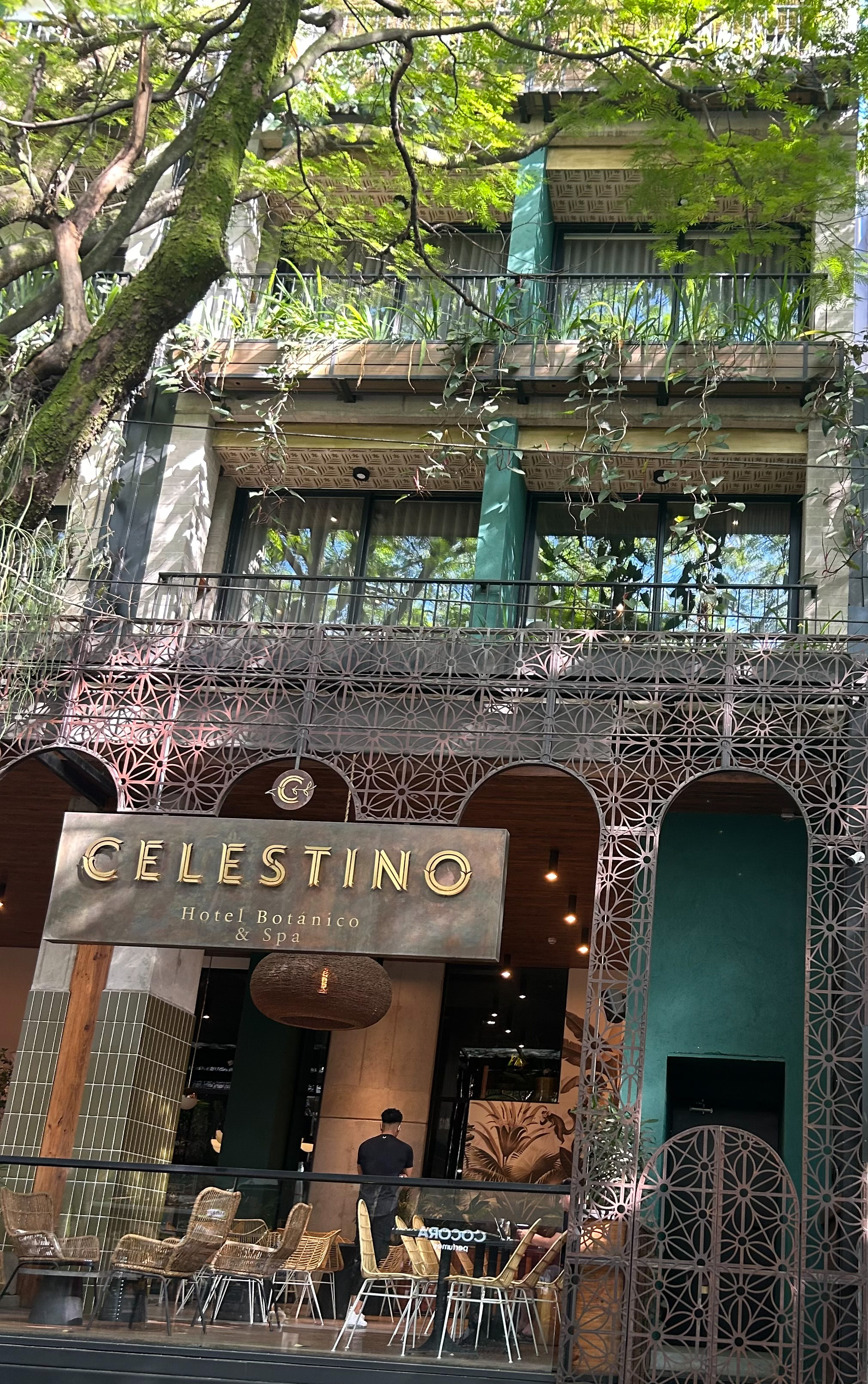
After a cheap but noisy couple of nights at the Beach Party hostel, I followed the Lonely Planet’s recommendation and booked three nights at the Celestino Boutique Hotel in the chic part of Medellin. What a change!
My room echoed the design chosen for the entire hotel by an imaginative artist who focused on exposed beams and pipework contrasted with expensive fabrics and wallpaper. I even had a Japanese style dressing gown and a personal coffee machine. However, there was a drawback.
The daytime quiet pedestrianised zone was replaced late evening by the loud sound of nightclub music. Chiquita, a gay nightclub, was just a few doors up the street. Fortunately, the noise level was nothing like that at Palomino…but after three nights, I switched to a quieter, less expensive hotel in the same neighbourhood, but much further away from the bars and nightclubs.
Imagine how blissful to wake up to the sound of birdsong.
Despite having the worst air pollution in Colombia, Medellin has much to recommend it. Not least, an excellent metro-system that includes a cable-car linking the poorest areas in the mountains with the city and all the advantages of urban life – healthcare, commerce, shops, entertainment etc.
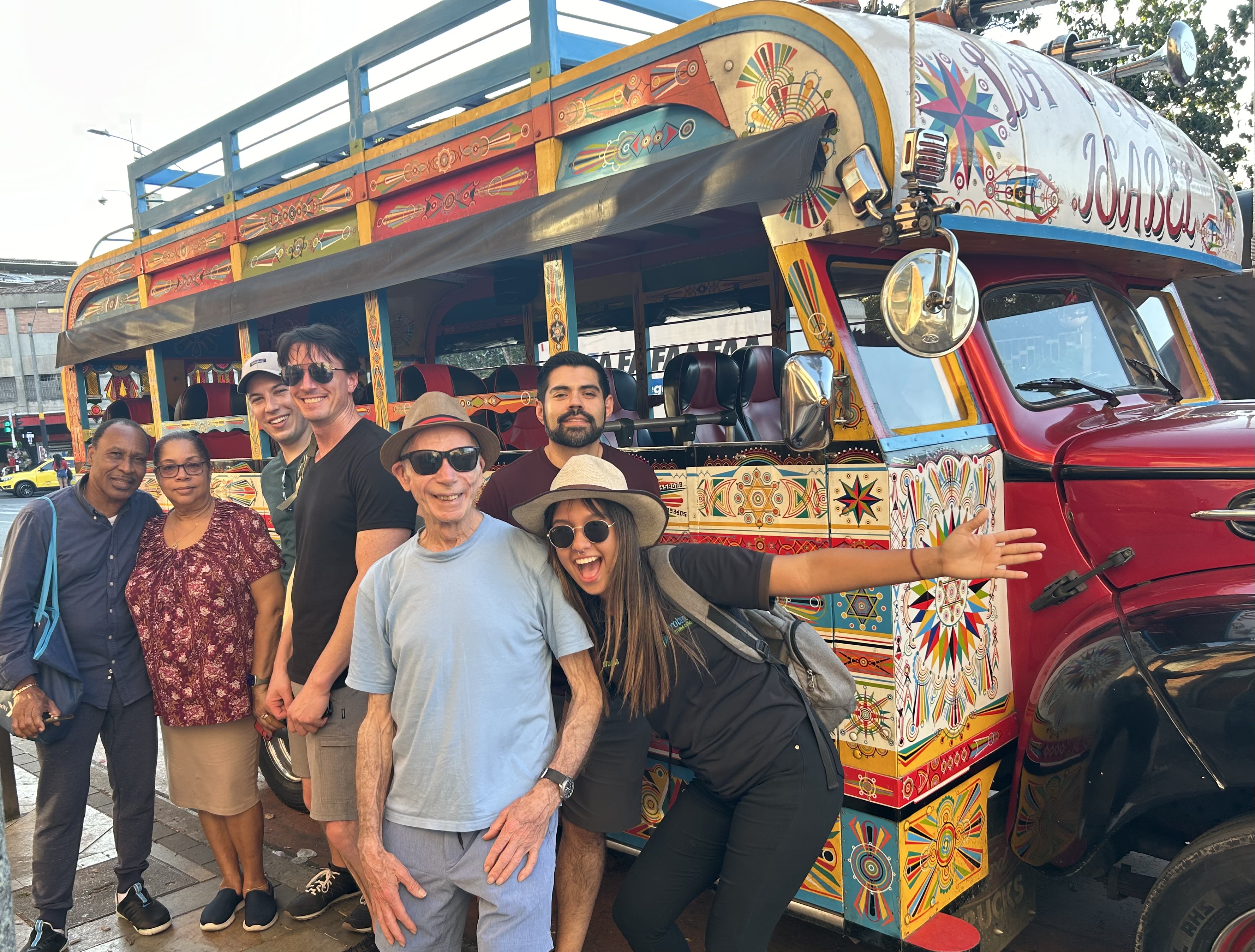
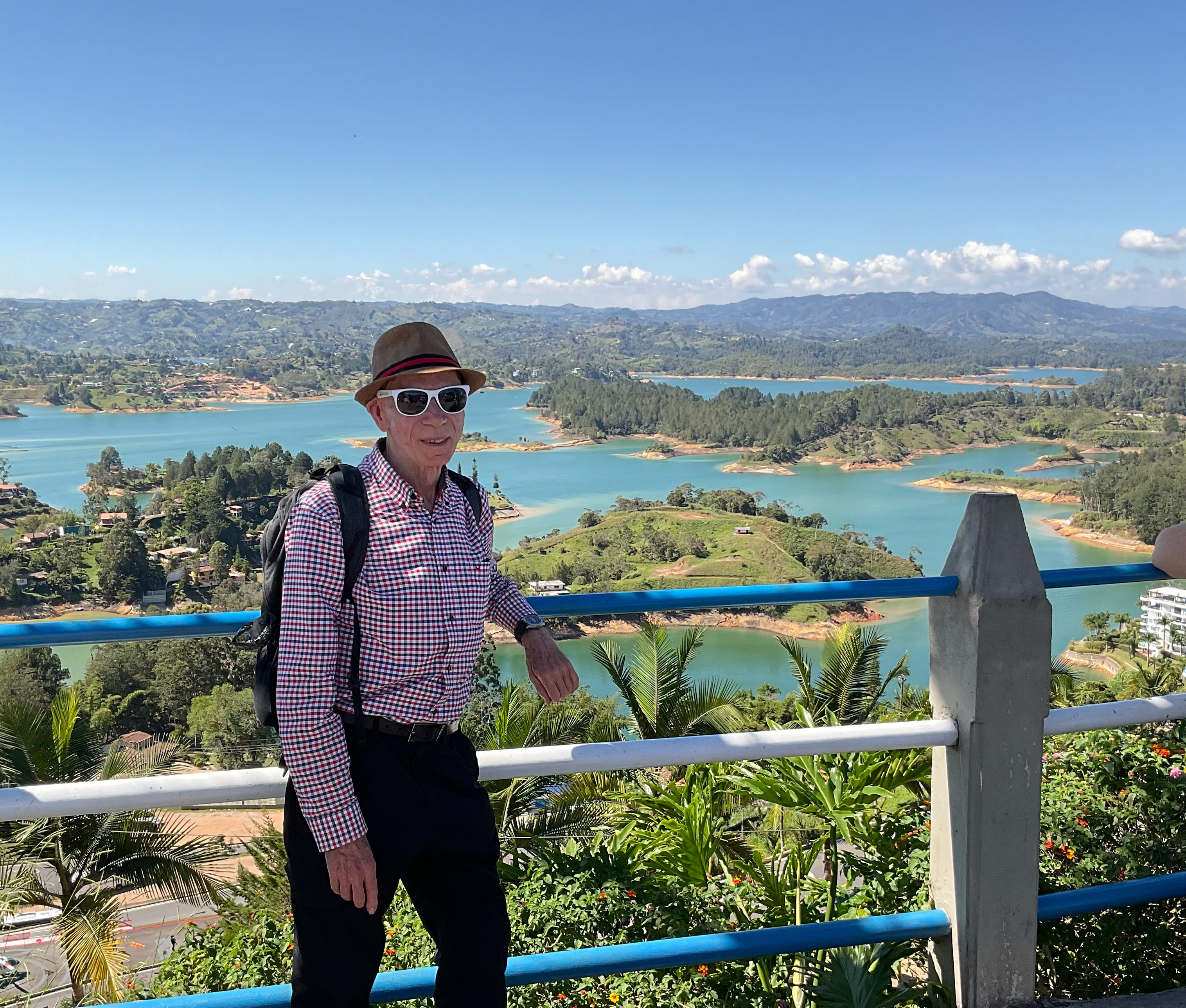
Medellin’s position in the Andes mountains also makes it a great base for excursions. My first trip was a city tour that ended up on top of one of the surrounding peaks at sunset with magnificent views of the city. The second was an eco-tourism all day excursion to the Penol Rock and Gautape.
On both outings, I found warm, friendly people. The city tour was with a small bunch of Americans who came from different parts of the USA. We quickly jelled together as a group. The second was a much larger bunch of tourists…mainly Colombian, but with a couple from Venezuela and a lone female traveler originally from Barcelona, but now living and working in Quebec, Canada.
The staff at both hotels in Medellin were, helpful, friendly and eager to please. I looked forward to chatting with them every morning and evening, and was sorry to say goodbye.
Flights to Bogota by the cheapest passenger service Wingo were at inconvenient times, so I paid a little extra and booked a flexible flight with Latam Airlines. Although the airport in Medellin is a long way from the city, my lady driver got me there in record time. I’m sure she would have scored highly on ‘Top Gear’ driver. I was much too early for my booked afternoon flight. The helpful ground staff assistant said she could put me onto the next available flight at no extra cost. Before I knew it, we were landing in Bogota with enough time to have lunch before finding the driver I had pre-booked to take me to my hotel.
There was no sign of the driver at the agreed meeting time. He eventually turned up late, having had difficulty with parking. Nevertheless..he got me to the Ibis Museo Hotel through some pretty dense traffic in good time…and kindly stayed with me until I had booked in.
I knew there was a likelihood of problems with my reservation…the booking system showed the wrong dates and wouldn’t allow me to change them. Edison, the young man who dealt with me tried his best to make sense of the errors. I could see he was getting nowhere fast. So I told him to forget the reservation…
“Does the hotel have a room available for five nights?”
“Yes” Edison replied.
“Excellent!”
A satisfactory conclusion to the issue…and the start of another warm, friendly relationship.
“Do you mind having a room on an upper floor?” He asked
“No….so long as there is a lift.”
Edison smiled.
A high rise hotel the size of a skyscraper without a comprehensive lift system would be unthinkable.
I was on the tenth floor. In the lifts, the lower floors are indicated as ‘disabled priority’. No doubt the age on my passport made me eligible for a lower floor room. It was gratifying that Edison had no hesitation in locating me towards the top of the building.
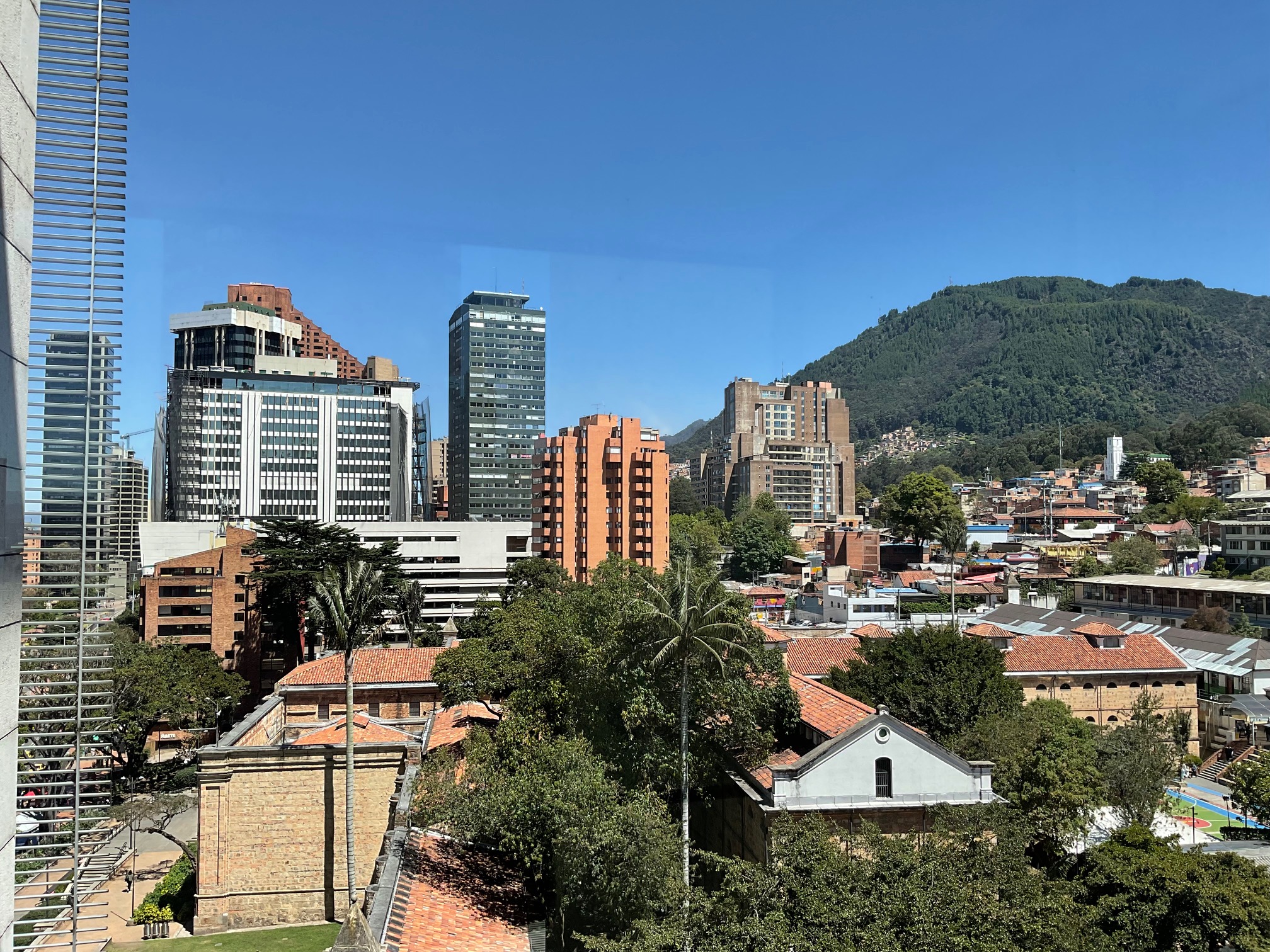
On my return to the capital, I discovered there were many beautiful green spaces to explore as well as impressive array of fine historical buildings to investigate. I was also hoping to meet up with Juan again and to visit the headquarters of RedSomos (the Colombian national HIV support organisation.) I succeeded with the first meeting but was thwarted in the second by having to deal with the fall-out of having my mobile phone stolen in the Plaza de Bolivar in front of Bogota cathedral.
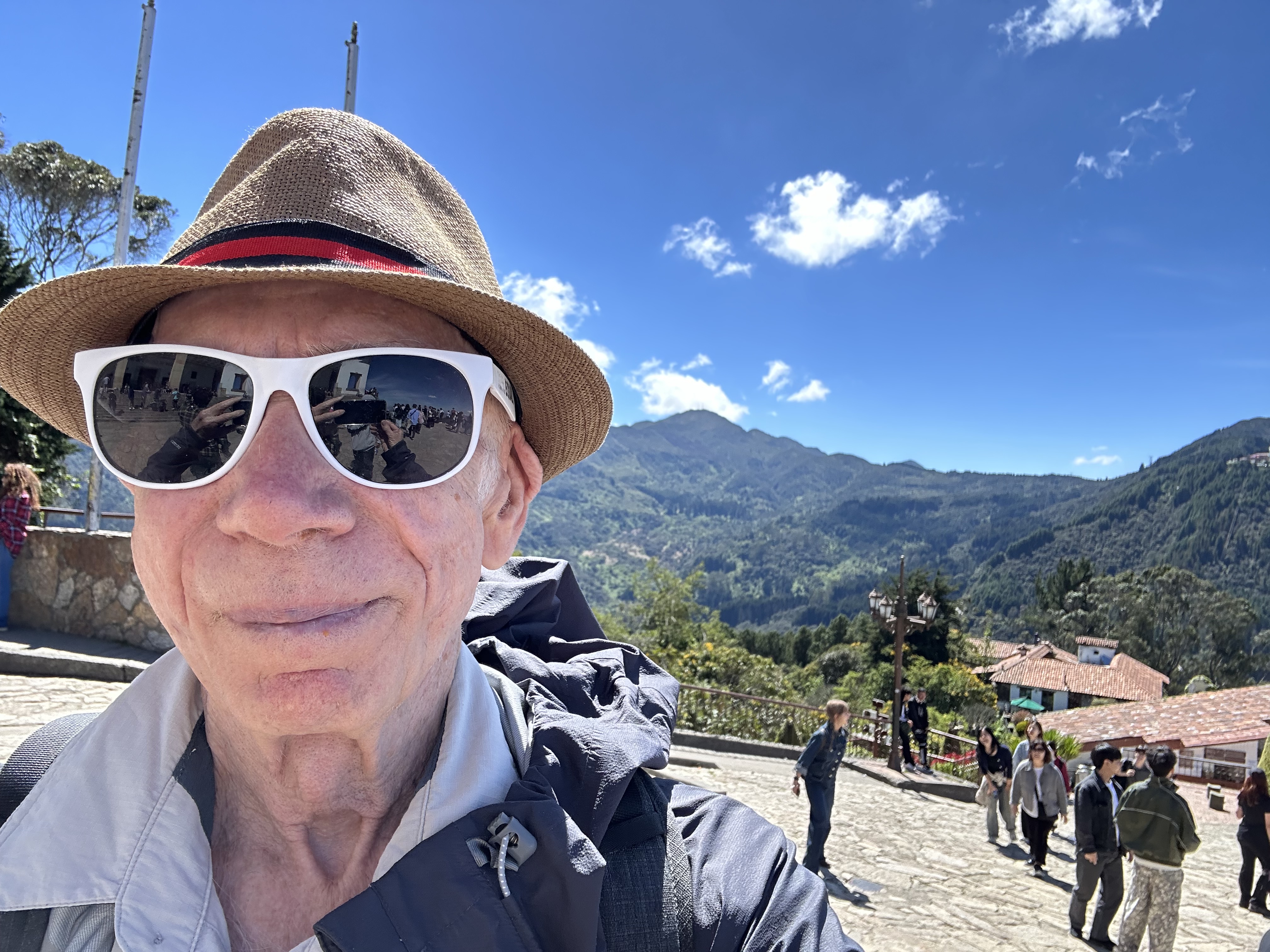
I won’t go into the embarrassing details of the theft except to say that I couldn’t report the incident to the local police. It was a crime…and all criminal proceedings have to start in the same place. That place was at the far end of the city in a busy, heavily populated area…not a spot on any tourist’s agenda. What was worse…I crossed paths with a youth in handcuffs being escorted out just as I was entering the precinct. There’s no distinction between victims and perpetrators: everyone is subjected to a body search. The whole procedure was an unforgettable experience…and, of course, conducted entirely in Spanish. Whilst I had gained considerable confidence in speaking and writing on my adventures, nothing prepared me for a sudden immersion into the vocabulary of the Colombian criminal justice system.
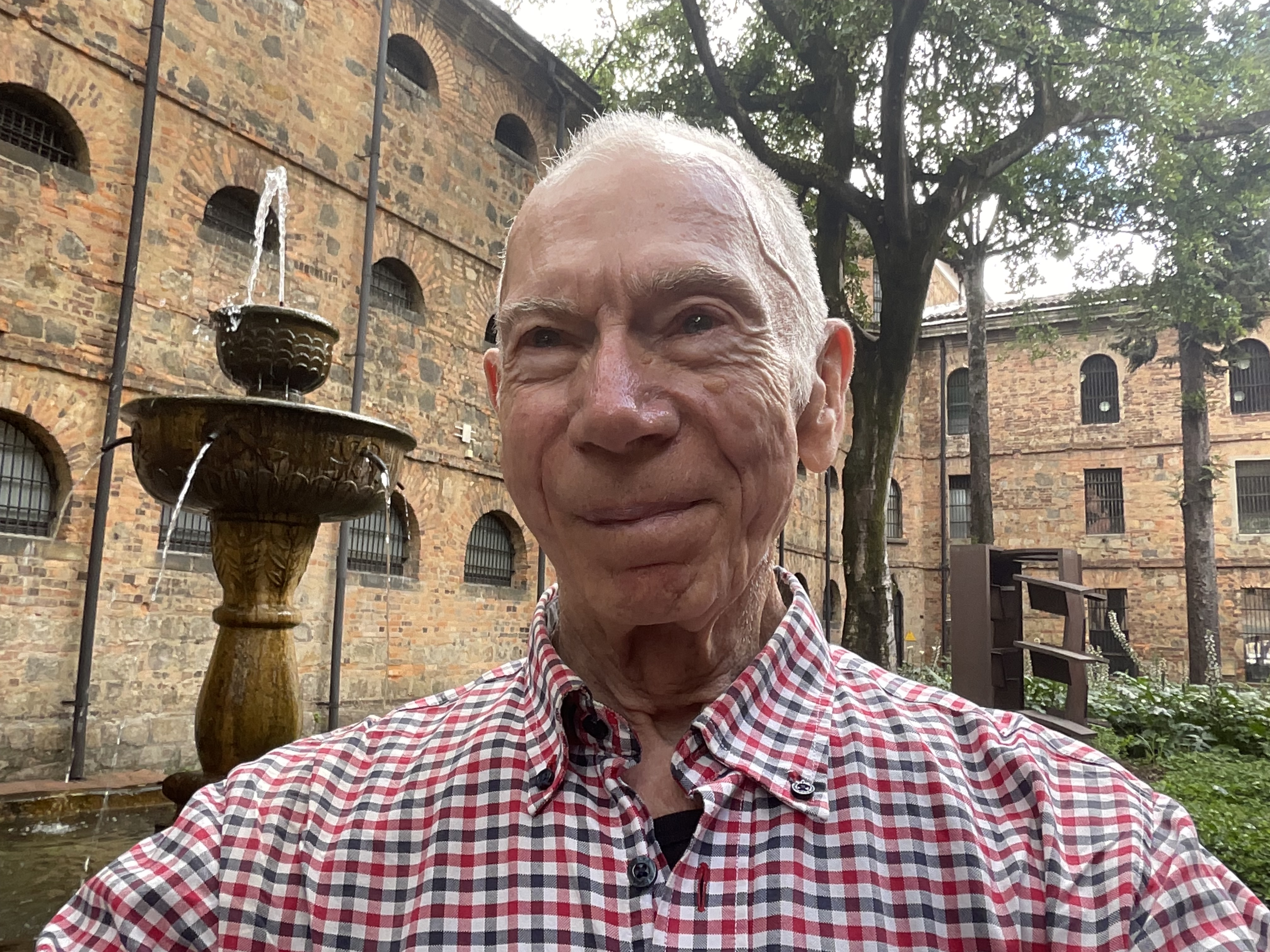
I will conclude this post with a brief reflection on the overall effect of the trip Apart from the phone theft…(an even that brought some new unexpected experiences)…I feel the adventure has done me a world of good. As well as traveling through entirely unknown territory…new horizons… I have also been on an internal journey that has brought a clearer overview of where I am at this point in my life, and what my next priorities might be. In addition, I feel I have grown an extra layer of resilience to cope with this busy older stage I have chosen for myself.
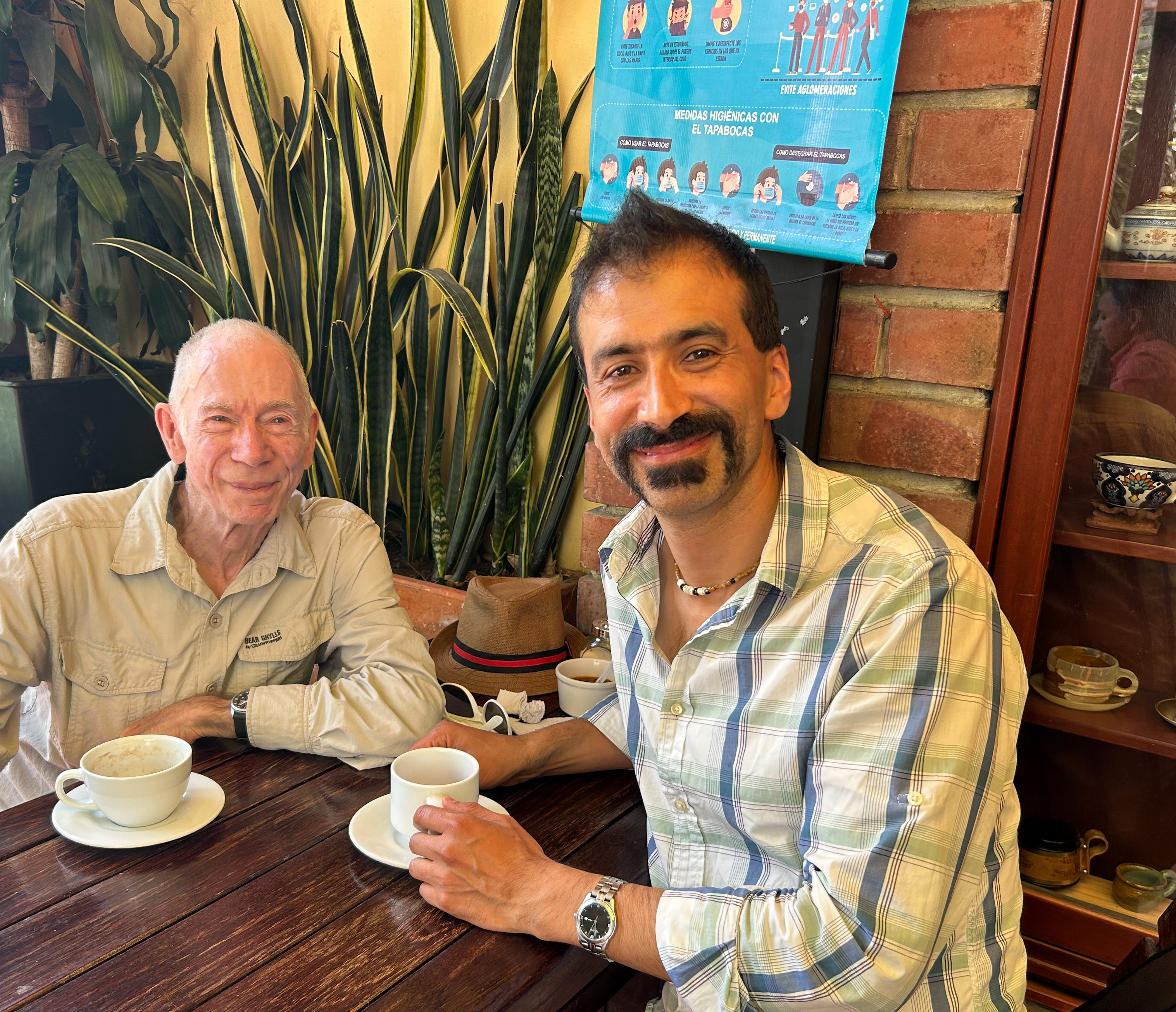

 Maurice Greenham
Leave a comment